The smell of cinnamon and caramelized maple hits you the second you open that oven door. That’s autumn comfort right there. These roasted root vegetable buddha bowls with maple cinnamon have been blowing up on Pinterest lately, and honestly? I get it. There’s something magical about those earthy sweet potatoes and carrots getting all golden and sticky.
Picture this: chunks of beets, parsnips, and carrots tossed with maple syrup and warm cinnamon, then roasted until they’re crispy on the edges but tender inside. Add some fluffy quinoa, creamy tahini drizzle, and fresh greens. It’s like your favorite cozy sweater turned into a meal. Full details in the blog!
I’ve been tweaking this recipe for months in my test kitchen, trying different spice combinations until I nailed that perfect sweet-savory balance. My culinary training taught me that roasting brings out vegetables’ natural sugars, but adding maple? That’s pure genius. I tested it on my pickiest friends. You’ll love the secret!
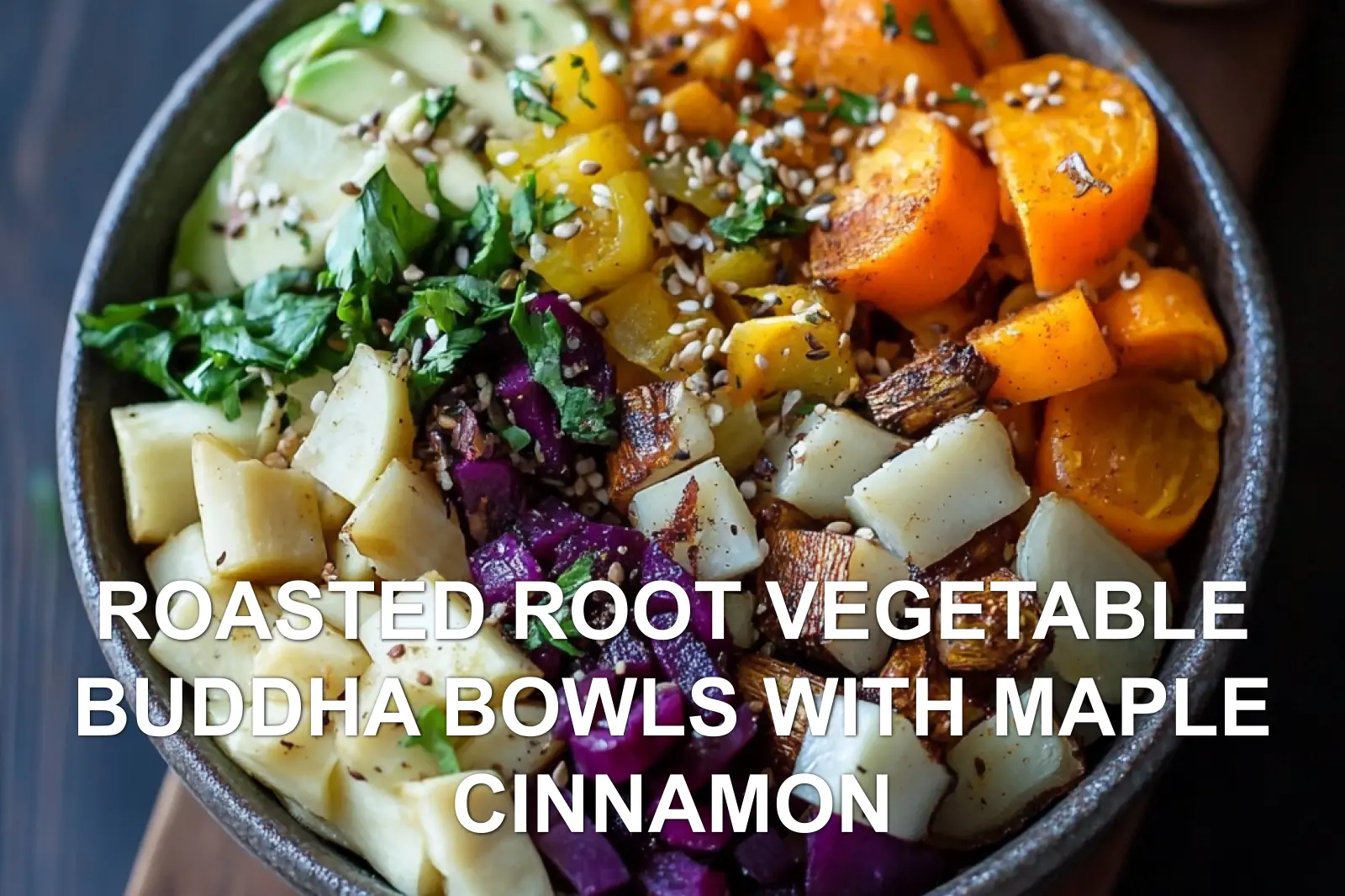
Roasted Root Vegetable Buddha Bowls Delicious Recipe
Ingredients
Method
- Heat your oven to 375°F.
- Spread the sweet potatoes, parsnips, and golden beets evenly on two baking sheets.
- Drizzle grapeseed or olive oil over the veggies, tossing with your hands to ensure they’re well coated.
- Season generously with sea salt and roast in the oven for about 30 to 40 minutes until they turn tender and develop a nice golden color.
- While the veggies roast, combine tahini, water, lemon juice, maple syrup, cinnamon, and sea salt in a blender and puree until creamy. Adjust the thickness with a splash of water or lemon juice if needed.
- Assemble the bowls by layering cooked brown rice, fresh spinach, and cabbage in each serving dish.
- Top with warm roasted root vegetables and drizzle with the prepared tahini dressing—remember, a little goes a long way!
- Finish by sprinkling sunflower seeds and freshly chopped parsley or cilantro over the top for added texture and freshness.
Notes
- For extra crunch, add a handful of toasted sunflower seeds before serving. You can swap grapeseed oil for olive oil depending on your preference. Leftovers keep well in the fridge for up to 3 days.
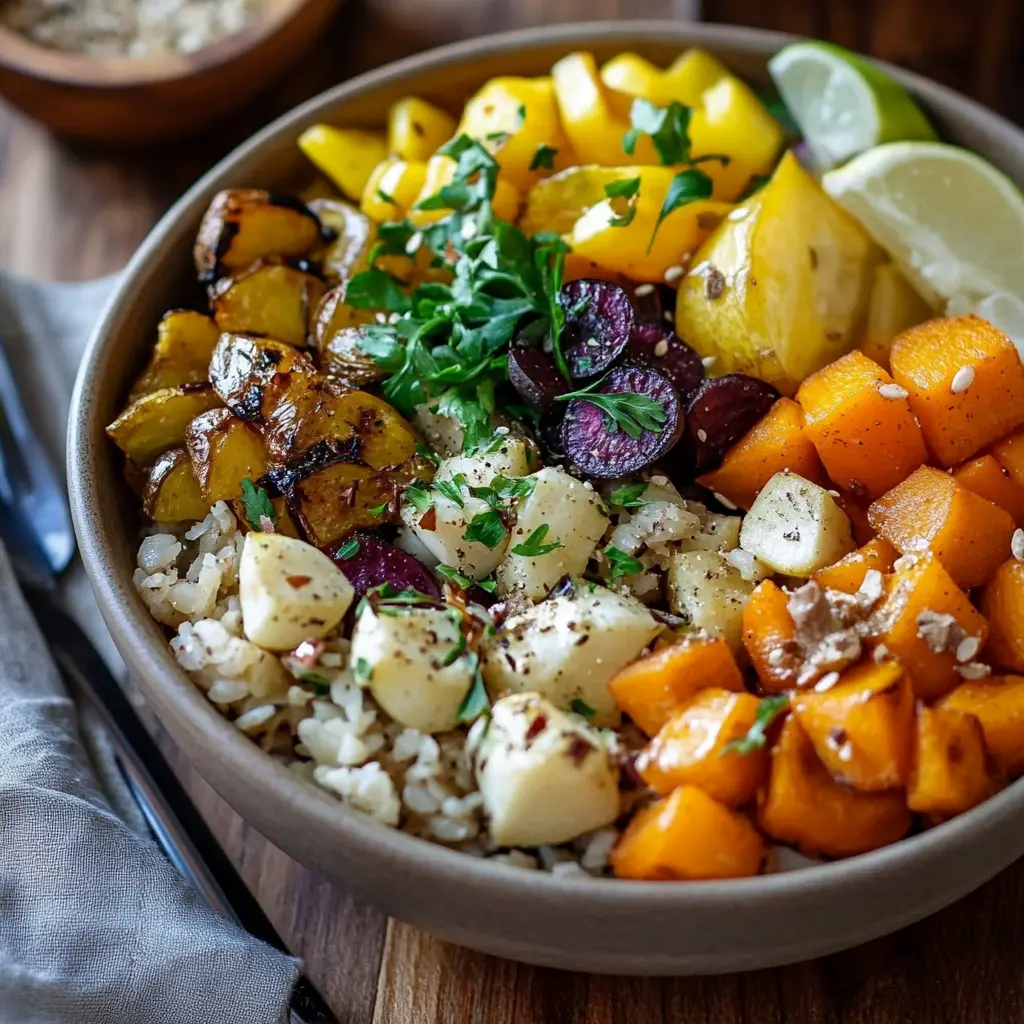
What Makes This Dish a Family Favorite
There’s something magical about watching vegetables transform in the oven. The sweet potatoes develop caramelized edges, the parsnips turn golden, and the beets become tender jewels. This recipe strikes the perfect balance between healthy and indulgent that everyone at the table can enjoy.
I appreciate how forgiving this meal is. Got picky eaters? They can skip the beets and double up on sweet potatoes. Need more protein? Toss in some chickpeas during the last 10 minutes of roasting. The maple cinnamon tahini dressing is truly the star here – creamy, slightly sweet, and it brings everything together beautifully.
Pro Tip: Make a double batch of the dressing. It keeps for a week in the fridge and transforms any leftover salad into something special.
Ingredients That Make the Magic Happen
The beauty of these roasted root vegetable Buddha bowls is their simplicity. Sweet potatoes add natural sweetness and that gorgeous orange color we all crave in fall. Golden beets bring an earthy depth without the mess of red beets (trust me on this one), while parsnips offer a subtle nuttiness that’s absolutely divine when roasted.
The tahini dressing is where my culinary training really shines. The combination of nutty tahini, warm cinnamon, and pure maple syrup creates layers of flavor that complement rather than compete with the vegetables. Fresh lemon juice brightens the dish, while sea salt enhances the natural sweetness of the roasted veggies.
| Ingredient | Easy Swap | Why It Works |
|---|---|---|
| Golden beets | Red beets or carrots | Less staining, milder flavor |
| Parsnips | Turnips or carrots | Similar roasting time |
| Spinach | Kale or arugula | Adds fresh contrast |
| Brown rice | Quinoa or farro | Keeps it hearty |
Simple Steps to Make It
The key to perfectly roasted vegetables is giving them space to breathe. Don’t overcrowd your pans – use two large baking sheets if needed. I learned this the hard way during recipe testing when my first batch steamed instead of roasted because I tried to cram everything onto one sheet.
While the vegetables work their magic in the oven, whip up the tahini dressing in a small blender. If you don’t have a blender, a jar and whisk work just fine. Just be sure to whisk vigorously until the dressing reaches a creamy consistency.
- Cut vegetables uniformly for even cooking – about ¼ to ½-inch pieces
- Toss with oil using your hands for the best coating
- Don’t flip the vegetables during roasting – let them caramelize
- Test doneness with a fork – they should be tender but not mushy
Easy Customizations for Every Family
This is where you can truly make the recipe your own. During months of testing, I found that adding a handful of chickpeas or white beans during the last 15 minutes of roasting creates a complete protein powerhouse. My vegetarian friends absolutely love this addition.
For families with different spice preferences, try making the dressing in small batches. Add a pinch of cayenne to one portion for heat lovers or extra maple syrup for those who prefer it sweeter. The base recipe is mild enough that even the most sensitive taste testers enjoyed it.
Seasonal Twist: In spring, swap some of the root vegetables for asparagus or Brussels sprouts. Summer calls for zucchini and bell peppers. The maple cinnamon dressing pairs beautifully with any combination.
How to Serve and Store Like a Pro
Assembly is half the fun with Buddha bowls. I like to arrange everything in sections rather than mixing it all together – it looks more Instagram-worthy and lets everyone customize their perfect bite. Start with your greens and rice as the base, then add the warm roasted vegetables on top.
The tahini dressing can be stored in the refrigerator for up to a week in a sealed container. If it thickens, simply whisk in a tablespoon of water or lemon juice to bring it back to a drizzling consistency. The roasted vegetables keep beautifully for 3–4 days and actually taste even better the next day when the flavors have melded.
| Storage Method | Duration | Reheating Tip |
|---|---|---|
| Refrigerator (assembled bowls) | 2-3 days | Remove greens, reheat vegetables only |
| Refrigerator (components separate) | 4-5 days | Warm vegetables in oven at 350°F |
| Tahini dressing only | 1 week | Bring to room temperature, whisk |
Expert Insight: The Science Behind Perfect Roasted Root Vegetables
According to food scientist Dr. Ali Bouzari, author of “Ingredient,” the key to exceptional roasted root vegetable Buddha bowls with maple cinnamon lies in understanding caramelization temperatures:
“Root vegetables contain natural sugars that caramelize beautifully at 400-425°F, creating complex flavors while preserving nutritional density. The maple addition accelerates this process naturally.”
The Food Lab: Better Home Cooking Through Science
This explains why properly roasted roots taste so much richer than their raw counterparts it’s pure chemistry at work.
For more delicious recipes and cooking inspiration, follow me on Facebook, Pinterest and Reddit!
My Kitchen Story
Last fall, I was determined to make these Roasted Root Vegetable Buddha Bowls with Maple Cinnamon tahini dressing in my air fryer after my oven broke right before dinner. The vegetables came out perfectly caramelized, and that sweet-savory dressing had my whole family asking for seconds. Now it’s our go-to cozy meal when we want something nourishing but not too fussy.
FAQs ( Roasted Root Vegetable Buddha Bowls with Maple Cinnamon )
What root vegetables work best for this recipe?
Carrots, sweet potatoes, parsnips, and beets are ideal choices as they roast evenly and complement the maple cinnamon flavors beautifully. Cut them into similar 1-inch pieces for uniform cooking. I recommend avoiding potatoes as they can become too starchy and don’t pair as well with the sweet glaze.
How long should I roast the vegetables?
Roast at 425°F for 25-30 minutes, flipping halfway through for even browning. Harder vegetables like beets may need an extra 5-10 minutes. The vegetables are done when they’re tender and caramelized around the edges with a fork-tender center.
Can I make the tahini dressing ahead of time?
Yes, the maple cinnamon tahini dressing keeps well in the refrigerator for up to 5 days. Store it in an airtight container and whisk in a tablespoon of warm water before serving if it thickens. The flavors actually develop and improve after a day of resting.
What grains pair well with these bowls?
Quinoa is my top choice as it cooks quickly and has a nutty flavor that complements the sweet vegetables. Brown rice, farro, or bulgur wheat also work wonderfully. Cook your grain according to package directions and fluff with a fork before serving.
How do I store leftover buddha bowls?
Store components separately in the refrigerator for up to 4 days for best results. Keep the dressing in a separate container to prevent soggy greens. Reheat the roasted vegetables in a 350°F oven for 8-10 minutes to restore their texture before assembling fresh bowls.

Conclusion
Roasted root vegetable Buddha bowls prove that simple techniques can create extraordinary flavors. That maple-cinnamon glaze transforms humble vegetables into something truly special – crispy edges, tender centers, and a gorgeous caramelized finish. You’ll love how the tahini dressing ties everything together with creamy, nutty richness that makes each bite irresistible.
Here’s a trick I learned from testing dozens of variations: double the tahini dressing and keep it in your fridge for quick weekday salads. Try swapping in butternut squash or adding roasted chickpeas for extra protein. These bowls reheat beautifully too – just warm the vegetables in a 350°F oven while prepping fresh greens.
I’d love to see your colorful creations! Tag me when you make these autumn harvest roasted root veggie power bowls – there’s something so satisfying about sharing these vibrant, nourishing meals. Save this recipe for those cozy Sunday afternoons when you want something wholesome that feeds both body and soul.