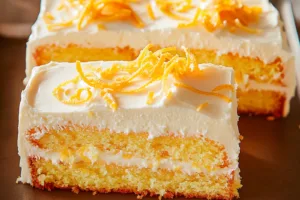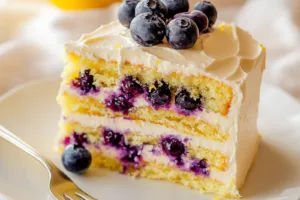
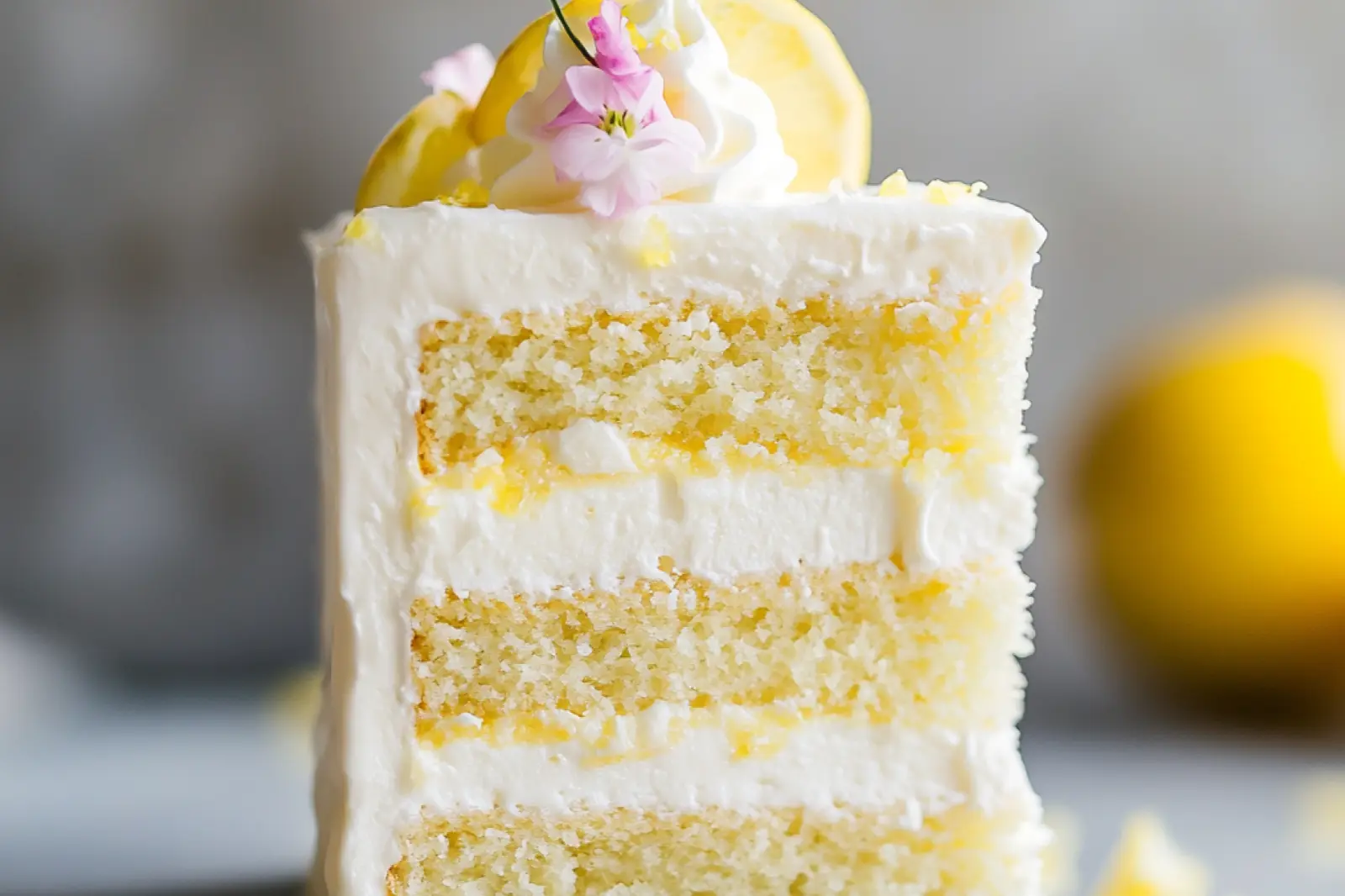
There’s something about fresh lemon and tangy cream cheese that just feels like sunshine in a bowl. Lemon Layer Cream Cheese Buttercream is the kind of frosting that makes you stop mid-swirl and sneak a spoonful silky, bright, and just sweet enough to balance that citrus zing.
I first made this for my daughter’s April birthday cake, and she took one bite and said, “Mom, this tastes like the fancy bakery but better.” That’s when I knew the swap from all-butter to cream cheese was the right call it gives you that cloud-like texture without being too heavy. I’ve tested it on layer cakes, cupcakes, and even sheet cakes since 2020, and it pipes beautifully every time.
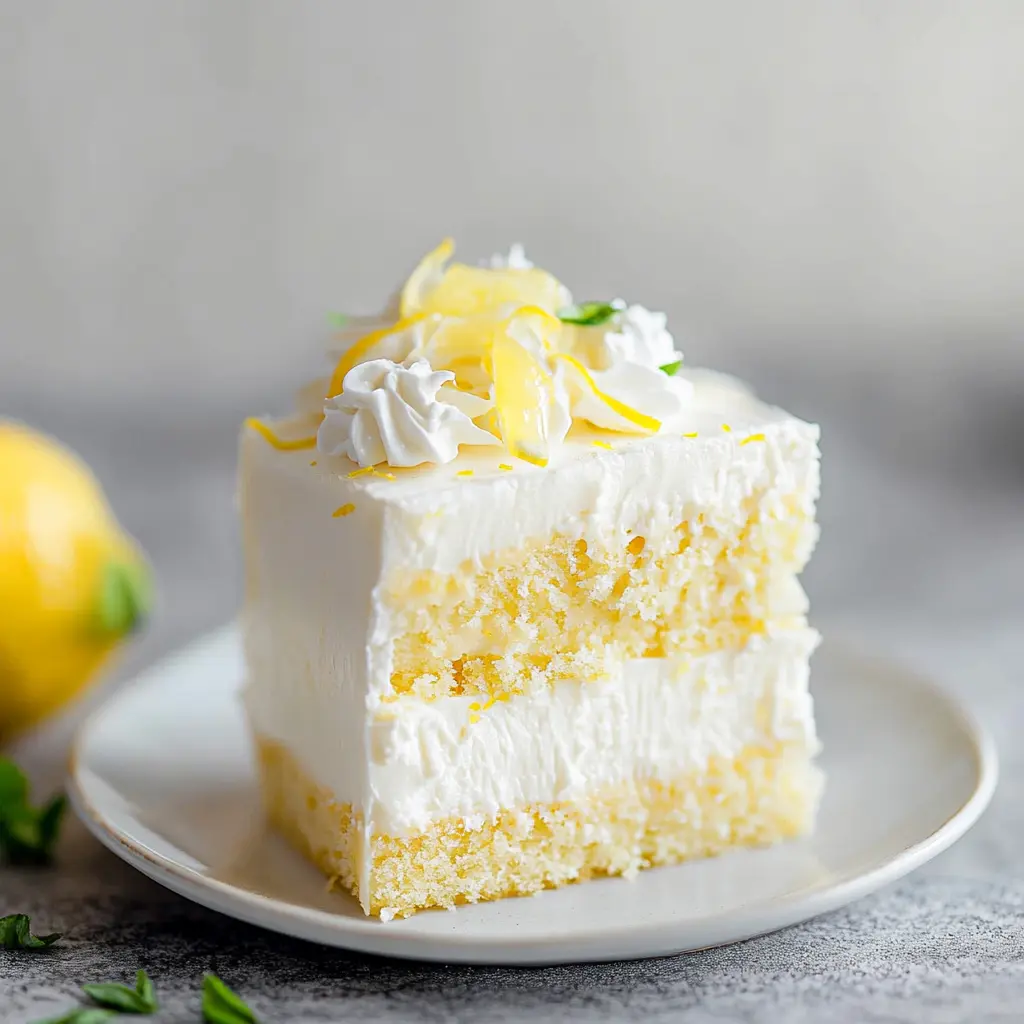
Best Lemon Layer Cream Cheese Buttercream Recipe
Ingredients
Method
- Set your oven temperature to 350°F (177°C) and prepare three 8-inch cake pans by greasing them and lining with parchment rounds, then grease the parchment as well.
- In a bowl, combine the sifted flour, baking powder, baking soda, and salt thoroughly and set aside.
- Using a mixer with a paddle or whisk attachment, cream together the softened butter and sugar on high speed until the mixture turns light and fluffy, about 3 minutes.
- Add eggs one by one along with the vanilla extract, mixing on high until everything is fully incorporated, scraping the bowl as needed to mix evenly.
- Turn the mixer speed down low and gradually add the dry ingredients just until blended.
- Slowly pour in the whole milk, lemon zest, and lemon juice while mixing on low, then give a quick whisk by hand to ensure there are no lumps; the batter will be thick.
- Divide the batter equally into the prepared pans and bake for 21 to 26 minutes, or until a toothpick inserted into the middle emerges clean.
- Let the cakes cool in their pans on a wire rack until completely cool before starting to frost.
- For the frosting, beat the butter at medium speed until smooth and creamy, roughly 2 minutes.
- Add the cream cheese and continue beating until the mixture is silky and well combined.
- With the mixer on low, gradually add confectioners’ sugar, lemon juice, vanilla extract, and a pinch of salt.
- Increase the speed to high and beat for 3 minutes until the frosting is light and fluffy, adjusting consistency with more sugar if thin or lemon juice if too thick.
- Trim the domed tops off the cooled cakes with a serrated knife to make flat layers.
- Place one cake layer on a serving plate or cake turntable and spread about 1 cup of frosting evenly on top.
- Add the second layer and apply another cup of frosting evenly.
- Position the last cake layer on top, then cover the entire cake with the remaining frosting, smoothing over sides and top.
- Chill the cake in the refrigerator for at least 30 to 45 minutes to set the frosting before slicing.
- Store any leftover cake wrapped tightly in the refrigerator for up to 5 days.
Notes
- The cake layers can be baked and cooled a day in advance, and the frosting can be made ahead and refrigerated overnight. Allow frosting to soften at room temperature for 10 minutes before assembling. You can freeze frosted or unfrosted cake layers for 2-3 months; thaw in the fridge overnight before serving. For a vanilla version of the frosting, swap lemon juice with milk or heavy cream and increase vanilla extract by 1/4 teaspoon.
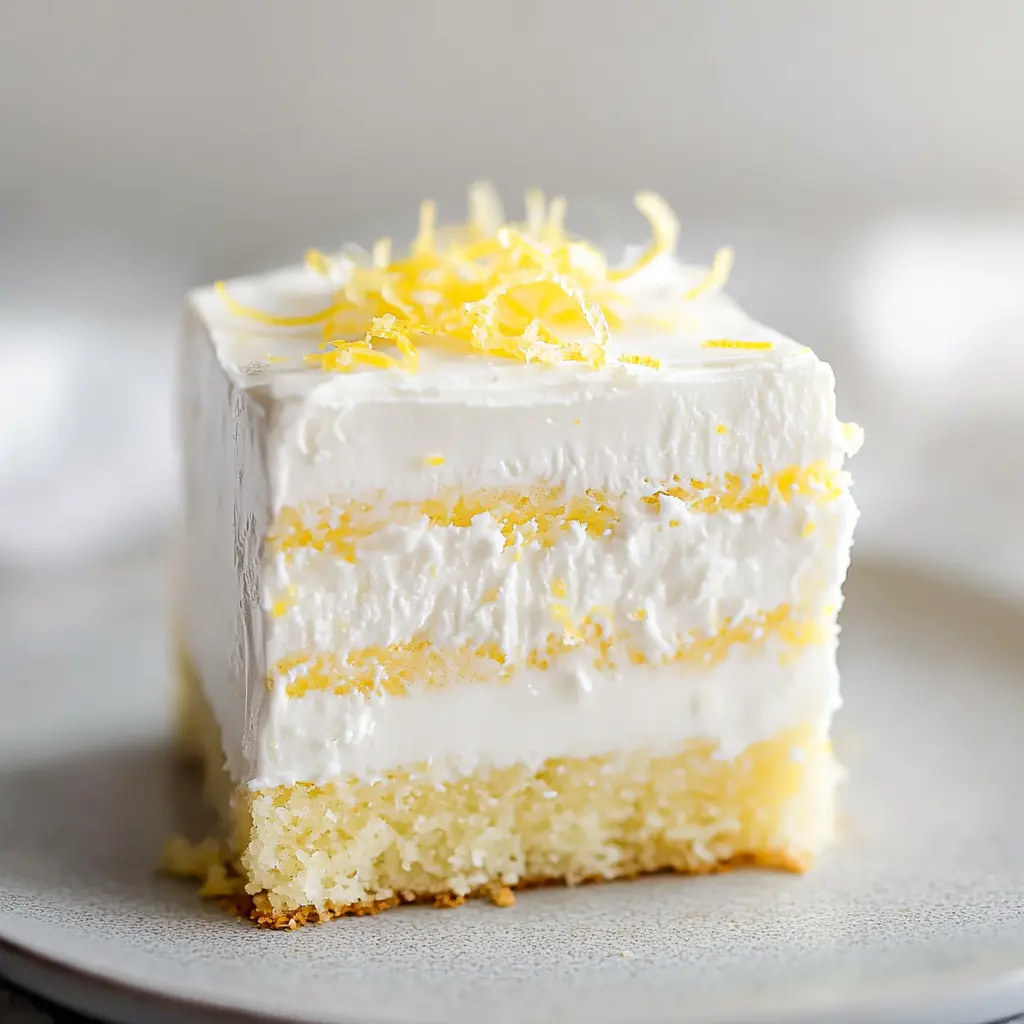
Why You’ll Love This Lemon Layer Cream Cheese Buttercream
The secret is in the balancetangy cream cheese cuts through the sweetness of traditional buttercream, while fresh lemon juice gives it that bright, zippy flavor you can’t get from a bottle. Here’s what makes it special:
- Light and fluffy texture: Cream cheese adds moisture without weighing down the frosting, so it pipes beautifully and spreads like a dream.
- Not overly sweet: The lemon juice and cream cheese naturally balance the confectioners’ sugar, making it feel indulgent but not cloying.
- Beginner-friendly: You don’t need special tools or fancy techniquesjust a mixer and a few minutes.
- Multipurpose magic: It works on layer cakes, cupcakes, sheet cakes, or even as a filling between cookies.
Key Ingredients & Why They Matter
Every ingredient in this frosting has a purpose. The unsalted butter creates that silky base, while full-fat brick cream cheese (not the spreadable kind!) keeps the texture thick and stable. Fresh lemon juice is a mustbottled just won’t give you that bright citrus punch. Confectioners’ sugar sweetens and thickens, and a pinch of salt balances everything out. Pure vanilla extract adds warmth without competing with the lemon.
Baker’s Note: Always soften your butter and cream cheese to true room temperaturenot melted, not cold. They should be soft enough to leave a thumbprint but still hold their shape.
How to Make It (Step-by-Step)
| Step | What to Do | Why It Matters |
|---|---|---|
| 1 | Beat softened butter on medium speed for 2 minutes until creamy | Aerates the butter for a fluffy base |
| 2 | Add softened cream cheese and beat until completely smooth | Prevents lumps and creates silky texture |
| 3 | Add confectioners’ sugar, lemon juice, and vanilla on low speed | Low speed keeps sugar from flying everywhere |
| 4 | Increase to high speed and beat for 3 minutes | Whips in air for that bakery-style fluffiness |
| 5 | Adjust consistency with more sugar, juice, or a pinch of salt | Lets you customize sweetness and thickness |
Troubleshooting Tips
If your frosting turns out too runny, add confectioners’ sugar one tablespoon at a time until it firms up. Too thick or stiff? A teaspoon of lemon juice or milk will loosen it right up. If you see lumps, your cream cheese or butter was probably too coldlet the mixture come to room temperature and beat again on high speed for a minute.
Pro Tip: If the frosting looks curdled, don’t panic. Keep beating on high for another minute or twoit usually comes together beautifully.
Flavor Variations & Swaps
You can easily customize this frosting to match your mood or season. Swap the lemon juice for lime juice for a tropical twist, or replace it with milk and an extra splash of vanilla for a classic vanilla cream cheese buttercream. A teaspoon of lemon zest folded in at the end adds texture and extra citrus aroma. For a lighter option, you can use reduced-fat cream cheese, though the texture will be slightly softer.
Serving & Storage Tips
| Storage Method | How Long It Lasts | Best Practice |
|---|---|---|
| Refrigerator (frosted cake) | Up to 5 days | Cover tightly; bring to room temp before serving |
| Refrigerator (frosting only) | Up to 1 week | Store in airtight container; re-whip before using |
| Freezer (frosted cake) | 2–3 months | Wrap well; thaw overnight in fridge |
| Room temperature | Not recommended | Cream cheese requires refrigeration for safety |
Always refrigerate this Lemon Layer Cream Cheese Buttercream for at least 30–45 minutes before slicingit helps the layers hold their shape and makes serving so much cleaner. Leftovers taste even better the next day when the lemon flavor has had time to settle in.
Join me on for more irresistible recipes and daily cooking inspiration Pinterest!
FAQs ( Lemon Layer Cream Cheese Buttercream )
How long does this frosting keep in the refrigerator?
This frosting stays fresh in the refrigerator for up to 1 week when stored in an airtight container. Before using refrigerated frosting, let it come to room temperature for 30 minutes, then re-whip briefly to restore its smooth texture. Always cover tightly to prevent it from absorbing other flavors.
Can I substitute bottled lemon juice for fresh?
Fresh lemon juice gives the best flavor, but bottled juice works in a pinch. Use the same amount called for in the recipe. However, you’ll miss out on the bright oils from fresh lemon zest, which really makes this recipe shine. For best results, use fresh lemons when possible.
Why is my buttercream too soft or runny?
Soft buttercream usually means your butter or cream cheese was too warm when mixing. Chill the frosting for 20-30 minutes, then re-whip. If it’s still soft, gradually beat in 1/4 cup more powdered sugar. Room temperature should feel cool to the touch, not warm.
Can I make this recipe ahead of time?
Yes, you can make this treat up to 3 days ahead. Store it covered in the refrigerator and bring to room temperature before using. You can also freeze it for up to 3 months. Thaw overnight in the fridge, then re-whip gently to restore the creamy texture.
What causes the frosting to curdle or separate?
Curdling happens when ingredients are at different temperatures or when you add liquid too quickly. If this occurs, continue beating for 2-3 minutes – it usually comes together. If not, try chilling for 15 minutes, then beat again. Always ensure butter and cream cheese are the same temperature.
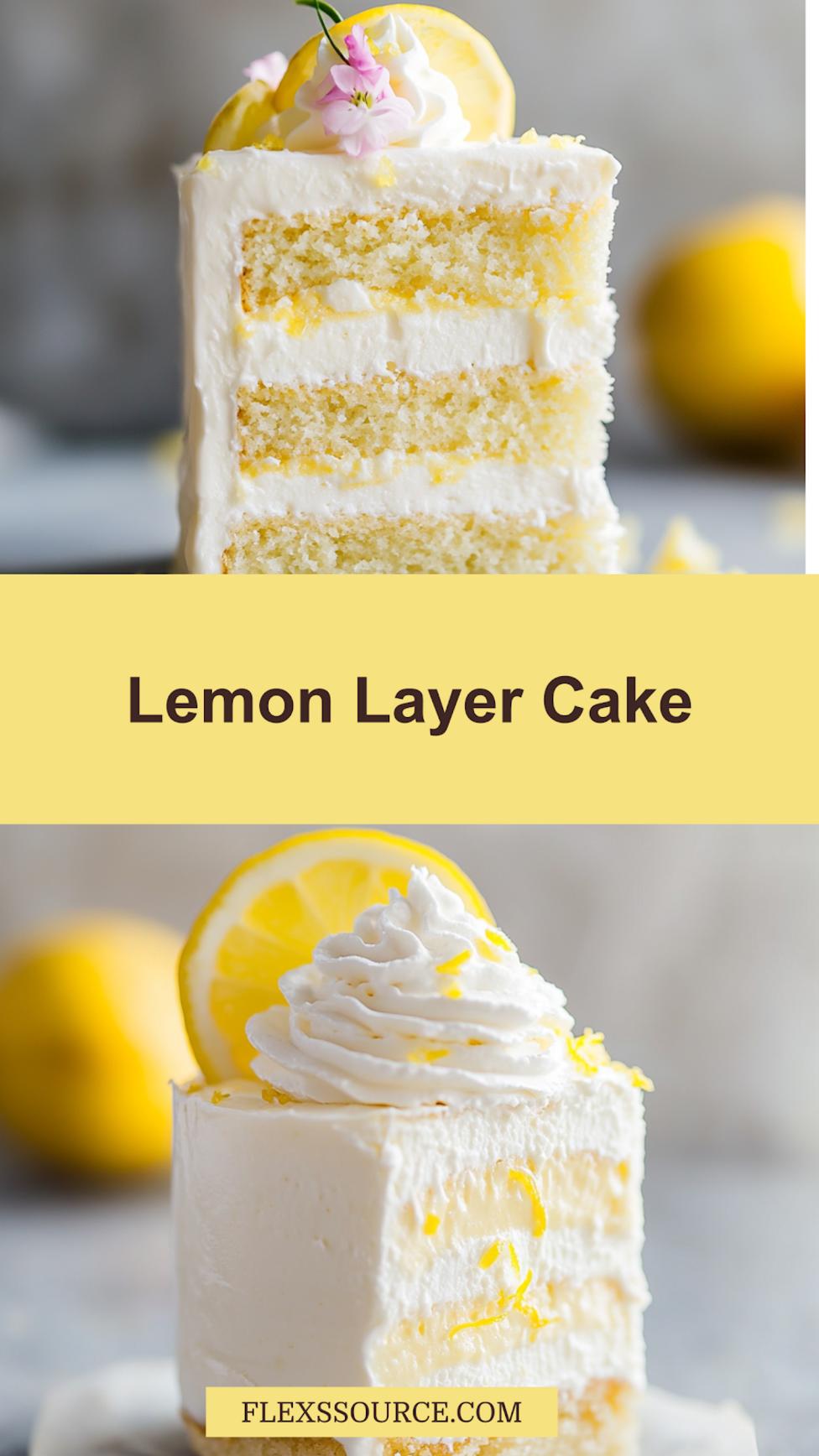
This Lemon Layer Cream Cheese Buttercream comes together in minutes and delivers that bright, tangy sweetness that makes every slice feel special. It pipes beautifully, spreads like a dream, and tastes like you spent hours at a fancy bakery. You’ll love how light and fluffy it turns outnot too sweet, just perfectly balanced with that fresh lemon zing.
A trick I picked up after testing this a dozen times: if you’re making it ahead, just store it in the fridge and give it a quick re-whip before frosting. Want to make it extra pretty? Add a sprinkle of lemon zest on top or tuck fresh berries between the layers. It also freezes beautifully, so you can frost your cake now and save it for later without losing any of that silky texture or bright flavor.
I’d love to see how yours turns out! Did you make this for a birthday cake or a spring brunch? Snap a photo and tag menothing makes my day like seeing your beautiful creations. And if someone you know adores lemon desserts, this is the recipe to share. Pin it, save it, bake it with loveyour kitchen is about to smell amazing.