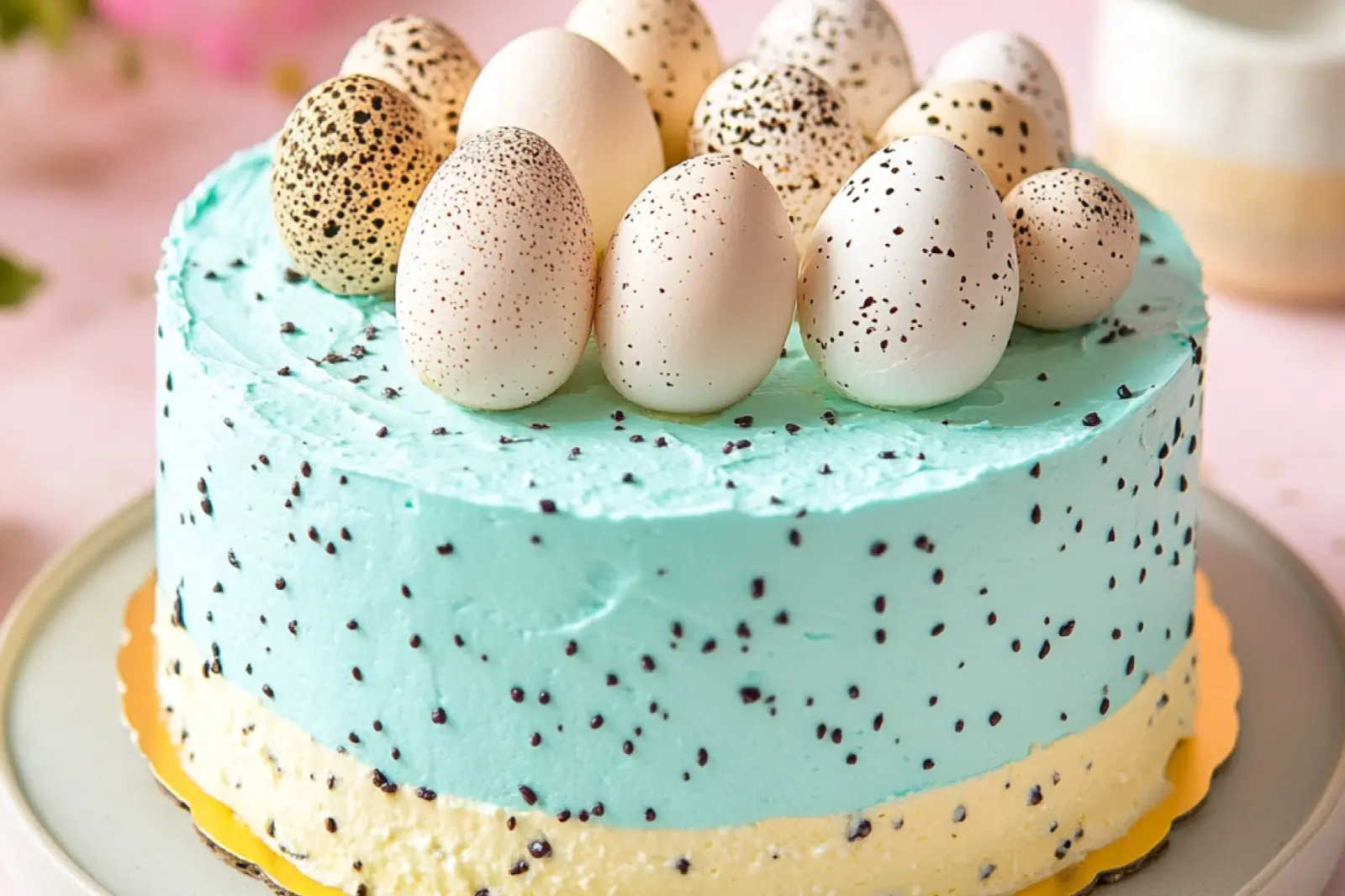
There’s something about a cake covered in tiny candy eggs that just screams spring. Speckled Egg Easter Cake is one of those desserts that looks like it came from a fancy bakery but takes maybe an hour from start to finish fluffy layers, silky frosting, and those adorable little speckled eggs piled on top.
I first made this back in 2021 when my sister asked me to bring “something festive” to brunch, and I panicked the night before. Turns out, a simple vanilla cake becomes totally show-stopping when you press those pastel eggs into buttercream while it’s still soft. I’ve tested at least a dozen frostings since then, and the one I’m sharing here holds those eggs perfectly without sliding off by dessert time.
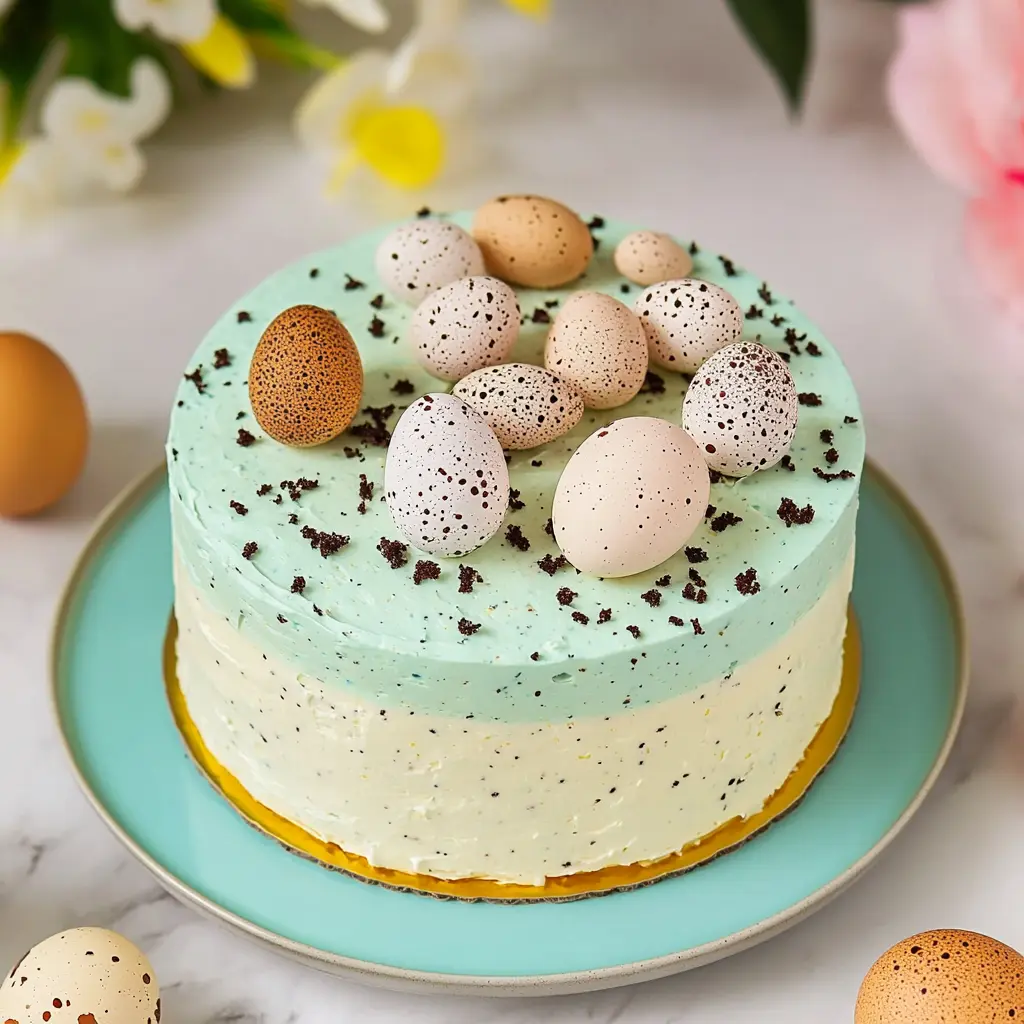
Speckled Egg Easter Cake Recipe Easy and Stunning
Ingredients
Method
- Heat your oven to 350°F and prepare three 8-inch cake pans by greasing and flouring them well.
- In a big bowl, sift together the flour, baking powder, and salt; set aside.
- Combine the milk and vanilla extract in a measuring cup or small bowl.
- Using a stand mixer with a paddle attachment, beat the softened butter and sugar until fluffy and pale.
- Add egg whites one by one into the butter mixture, blending just until combined.
- Alternate mixing in the dry ingredients and the milk mixture, beginning and ending with the dry ingredients; avoid over mixing to keep the cake light.
- Scrape the bowl’s edges and bottom to ensure an even batter.
- Pour the batter evenly into the prepared pans and gently tap each pan on the counter twice to release air bubbles.
- Bake for 30 to 35 minutes or until a toothpick comes out clean or with a few moist crumbs.
- Let the cakes cool in the pans on the counter for about 10 minutes before transferring them to a wire rack to cool fully.
- While cakes are cooling, cream the butter for the frosting on medium speed until smooth, about 2 to 3 minutes.
- Gradually add powdered sugar, one cup at a time, blending thoroughly after each addition.
- Slowly incorporate the heavy cream and vanilla, then whip on high for 1 to 2 minutes to achieve a fluffy consistency.
- Mix in teal food coloring until evenly colored.
- Level each cooled cake layer by trimming the domes with a sharp knife.
- Place the first cake layer upside down on a serving plate and spread about one-third cup of frosting evenly over it.
- Repeat layering with remaining cake layers, applying frosting between each.
- Use half the leftover frosting to crumb coat the entire cake, smoothing it out.
- Chill the crumb-coated cake in the fridge for 15 to 20 minutes to firm the frosting.
- Finish by covering the cake in the rest of the frosting, smoothing it evenly; create texture by dragging a spatula while spinning the cake if desired.
- Using a small food-safe brush, flick black food coloring onto the frosting to create the speckled appearance, working carefully to avoid stains.
- Right before serving, pipe whipped cream or extra buttercream swirls on top and decorate with mini Cadbury eggs.
- Store leftovers in an airtight container refrigerated up to three days; bring to room temperature before eating.
Notes
- Leftovers keep well in an airtight container in the fridge for up to three days—remember to let the cake sit out before serving. For the white swirls on top, you can pipe freshly whipped cream or a half batch of plain vanilla buttercream. To make whipped cream, chill your mixing bowl and whisk, then beat heavy cream with vanilla and powdered sugar until stiff peaks form. Alternatively, use half the buttercream recipe without coloring for an extra creamy topping.
Why You’ll Love This Speckled Egg Easter Cake
This is the kind of dessert that makes people ask for the recipe before they even taste it. The speckled effect looks bakery-level fancy, but you’re literally just flicking food coloring with a paintbrush my kids love helping with that part, even if it gets a little messy.
Here’s what makes it special:
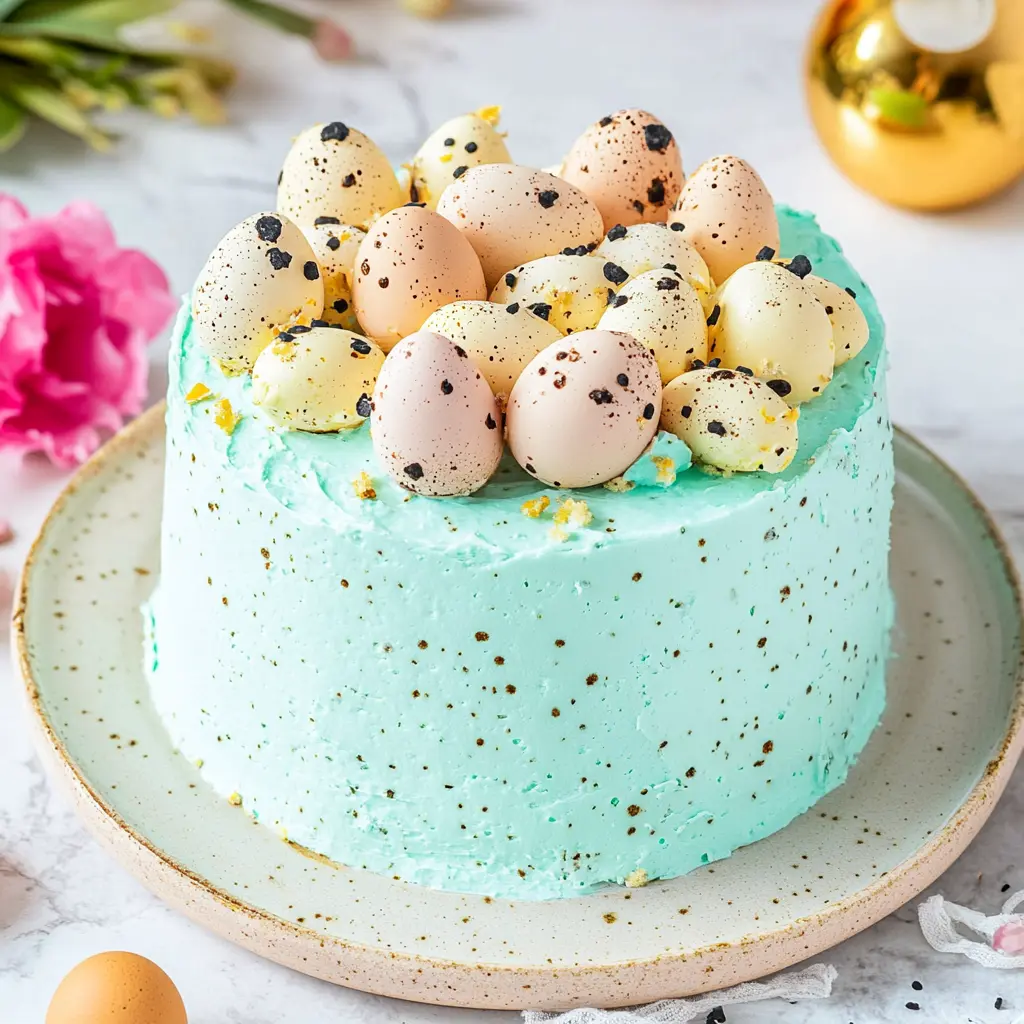
- Light and fluffy: The vanilla cake has the perfect crumb, and the vanilla buttercream frosting is silky without being too sweet.
- Simple ingredients: You probably already have most of what you need flour, butter, eggs, sugar, and milk.
- Showstopper looks: Those mini Cadbury eggs pressed into the frosting? Pure spring magic.
- Flexible timing: Bake the layers a day ahead and assemble the morning of your gathering.
What You’ll Need (and a Few Smart Swaps)
The ingredient list looks long, but it’s mostly pantry staples. You’ll use all-purpose flour, baking powder, salt, butter, granulated sugar, egg whites, vanilla extract, and milk for the cake. The frosting calls for more butter, powdered sugar, heavy whipping cream, vanilla extract, and a touch of teal food color for that soft robin’s egg blue.
For the speckled effect, you’ll need black food color liquid works best, but if you have gel, just thin it with a little vodka or clear vanilla extract. Top it all off with mini Cadbury eggs and optional whipped cream swirls.
| Ingredient | Smart Swap |
|---|---|
| Salted butter | Unsalted butter + pinch of salt |
| Whole milk | 2% milk or buttermilk for extra tang |
| Heavy whipping cream | Half-and-half (frosting will be slightly softer) |
| Teal food color | Any pastel shade you love pink, lavender, mint green |
How to Make It (Step-by-Step)
Start by preheating your oven to 350°F and prepping three 8-inch cake pans with shortening and flour. Whisk together your dry ingredients in one bowl, and stir the milk and vanilla together in another. Cream the butter and sugar until fluffy, add the egg whites one at a time, then alternate adding the dry ingredients and milk mixture start and end with dry. Don’t overmix or you’ll end up with a dense cake.
Divide the batter evenly between your pans, drop them on the counter a couple times to release air bubbles, and bake for 30 to 35 minutes. Let them cool in the pans for 10 minutes, then transfer to a wire rack. While they cool, make your frosting by creaming the butter, adding powdered sugar one cup at a time, then mixing in the heavy cream, vanilla, and teal food color until light and fluffy.
| Step | What to Do | Time |
|---|---|---|
| Prep & Mix | Combine ingredients, cream butter & sugar, alternate wet/dry | 15 min |
| Bake | Bake 3 layers at 350°F until toothpick comes out clean | 30-35 min |
| Cool | Cool in pans 10 min, then on wire rack completely | 30 min |
| Frost & Assemble | Level layers, crumb coat, final coat, speckle, decorate | 30 min |
Assembly Tips and That Speckled Effect
Level each cake by slicing off the domed tops a serrated knife works great, or grab a cake leveler if you have one. Stack the layers with about a third cup of frosting between each, then do a thin crumb coat over the entire cake and pop it in the fridge for 15 to 20 minutes. This seals in the crumbs so your final coat looks smooth.
Once it’s set, spread the remaining frosting over the cake. For that textured look, hold your spatula against the side and slowly spin the cake on a turntable while dragging the spatula upward. Now for the fun part: dip a food-safe paintbrush into black food coloring and flick it at the cake to create speckles. Fair warning: this gets messy and the black stains everything, so lay down paper towels and wear gloves if you have them.
Serving, Storing, and Make-Ahead Magic
Right before serving, pipe swirls of whipped cream or extra buttercream on top and nestle those mini Cadbury eggs into the frosting. The cake tastes best at room temperature, so if you’ve had it in the fridge, let it sit out for about 30 minutes before slicing.
Store leftovers in an airtight container in the refrigerator for up to three days. The buttercream holds up beautifully, and the cake stays moist. If you want to get ahead, bake the layers the day before, wrap them tightly in plastic wrap, and store at room temperature then frost and decorate the next day.
| Storage Method | How Long | Best Practice |
|---|---|---|
| Room temperature (unfrosted layers) | 1 day | Wrap tightly in plastic wrap |
| Refrigerator (assembled cake) | Up to 3 days | Airtight container, bring to room temp before serving |
| Freezer (unfrosted layers) | Up to 1 month | Wrap in plastic, then foil; thaw overnight in fridge |
Join me on for more irresistible recipes and daily cooking inspiration Pinterest!
FAQs ( Speckled Egg Easter Cake )
How do I create the speckled egg effect on the frosting?
Use a clean toothbrush dipped in diluted food coloring to splatter dots across the frosted surface. Hold the brush 6 inches away and run your thumb across the bristles for even distribution. Practice on parchment paper first to get the right technique down.
What type of cake base works best for this recipe?
A vanilla or lemon cake provides the perfect neutral canvas for decorating. The sturdy crumb holds up well to frosting and the speckled design. Avoid chocolate cake as it makes the colorful speckles harder to see against the dark surface.
Can I make this dessert ahead of time?
Yes, bake the cake layers up to 3 days ahead and freeze them wrapped in plastic. Assemble and decorate the day before serving for best results. The speckled effect actually looks better after sitting overnight as the colors set.
What colors should I use for authentic looking speckles?
Brown and black food coloring mixed with small amounts of red create the most realistic egg speckles. Start with light brown dots, then add darker brown and tiny black specks. Keep the base frosting white or pale cream colored for contrast.
How do I prevent the food coloring from bleeding into the frosting?
Use gel food coloring instead of liquid, and let each layer of speckles dry for 10 minutes before adding more. Make sure your frosting is completely set before decorating. Work in a cool kitchen to prevent the frosting from softening.
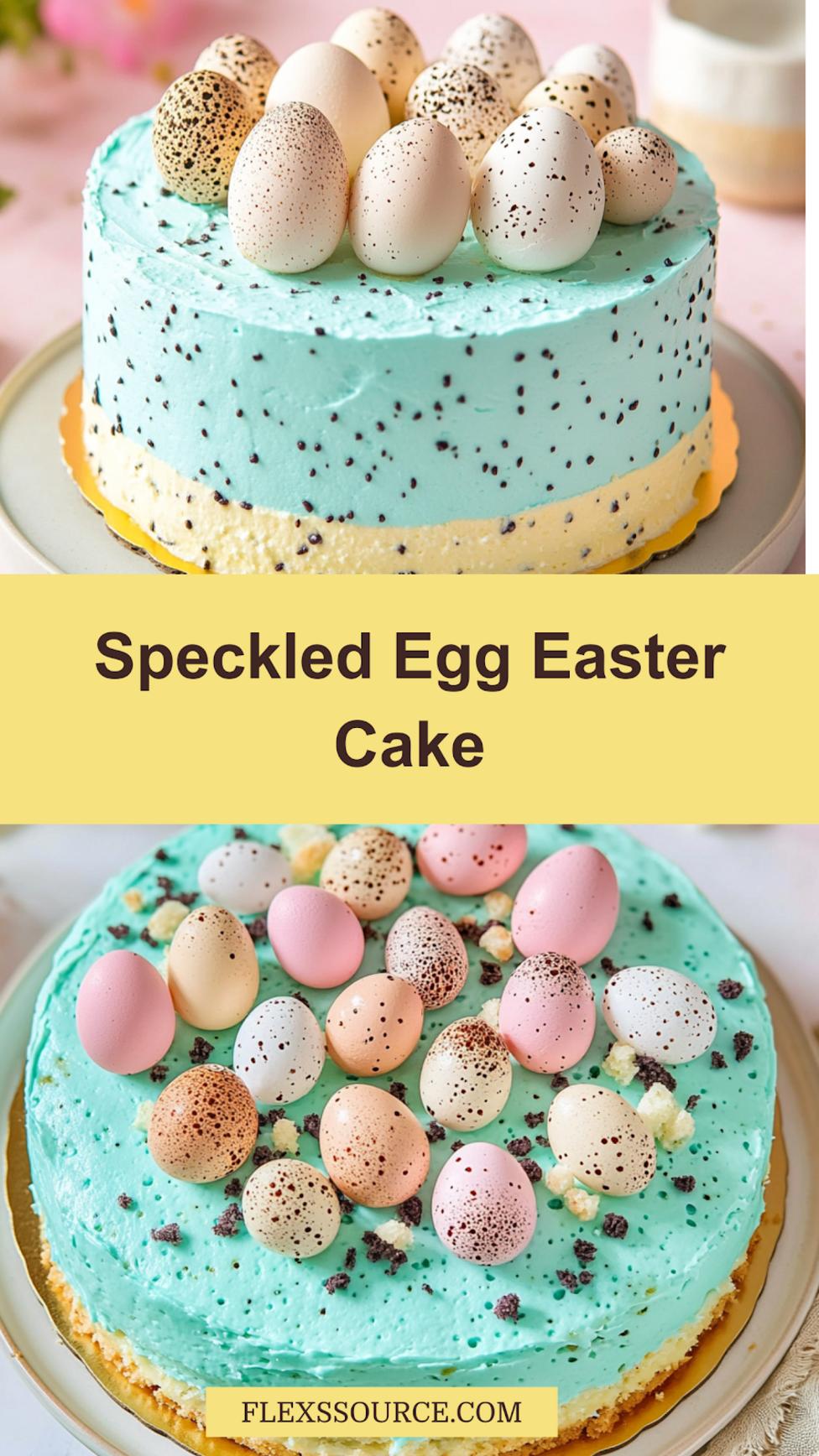
You’ll love how this Speckled Egg Easter Cake turns out tender layers, silky frosting, and those adorable pastel eggs pressed on top while everything’s still soft and perfect. It takes about an hour start to finish, but it looks like you spent all day. The vanilla flavor is pure springtime, and honestly, it tastes even better the next day once the layers have settled together.
If you want to switch things up, try lemon zest in the batter or swap the teal frosting for soft pink or lavender I’ve done both and they’re gorgeous. You can also use regular-size Cadbury eggs around the base if the minis are sold out. A trick I learned from my aunt’s kitchen: freeze your cake layers for twenty minutes before frosting and they won’t shed crumbs everywhere. Leftovers keep beautifully in the fridge for up to three days, just let the cake come to room temperature before serving so the frosting is soft and creamy again.
I’d love to see your version tag me if you make this for Easter brunch or a spring birthday! Did you grow up decorating cakes with your mom or grandma? There’s something so special about passing down those little traditions. Save this recipe, share it with someone who’d smile at a slice, and enjoy every bite of spring on a plate.